
Mythos
a poem about the wonder of Story and the Source behind it

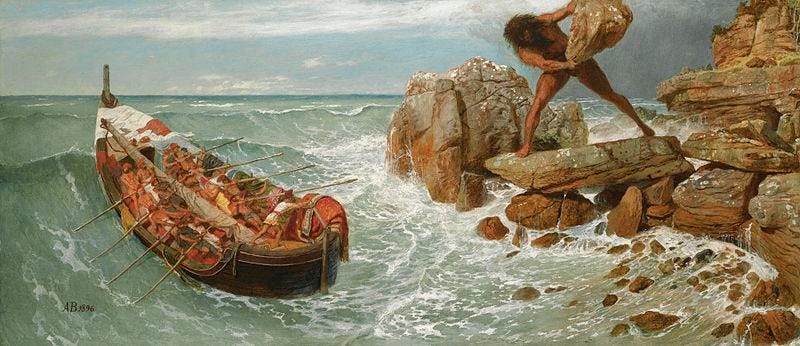
Recently, I was privileged to have one of my poems receive honorable mention in the inaugural All Words Bright & Beautiful poetry contest, which featured a slate of wonderful poems prompted by the word “coruscate,” meaning to flash or sparkle with reflected brilliance. My poem is called “Mythos,” and it’s about how Story has shimmered through the ages.
The title “Mythos” comes from Aristotle’s Poetics, which he uses to refer to the ordered arrangement of events in a drama, that is, what we commonly refer to as the plot. He essentially describes mythos as the soul of Story because the power of a story lies in the shape of its action (as distinct from its other elements, however important they are), which bears a universal resemblance across ages and cultures.
The poem is inspired, in part, by Arthur O’Shaunessey’s “Ode.” I first heard “Ode” in the movie Willy Wonka & the Chocolate Factory, where Wonka quotes its opening lines to Veruca Salt after she questions the legitimacy of a “snozzberry” while sampling tasteable wallpaper.
Veruca: Snozzberries? Whoever heard of a snozzberry?
Wonka (grabbing her face): We are the music makers, and we are the dreamers of dreams.
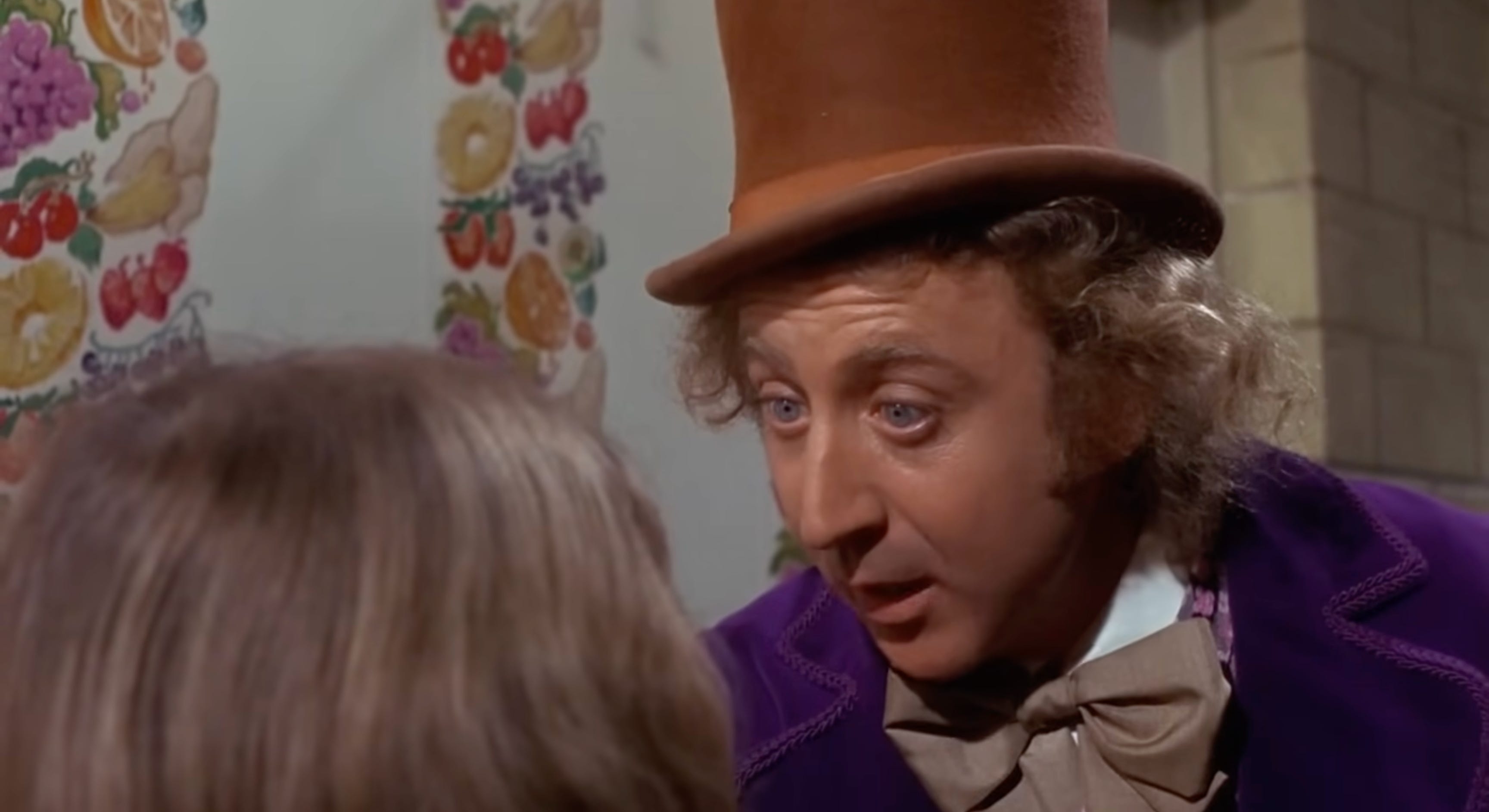
I take these lines to be the thesis of the entire, gloriously weird film.
The second inspiration for “Mythos” comes from my love for storytelling and storytellers. It pays homage to great storytellers like Homer, the Brothers Grimm, Andrew Lang, and, of course, J.R.R. Tolkien, while honoring Story’s deepest and original source and its mysterious power to reach beyond reason and inspire us to slay dragons.1
As Chesterton notes:2
“Fairy tales do not tell children that dragons exist. Children already know that dragons exist. Fairy tales tell children that dragons can be killed.”
I am deeply honored to have had “Mythos” published by the contest judges and appreciate their support of the piece.
Here’s the poem, with a few kenning-like compounds as a hat-tip to O’Shaughnessy’s “Ode”:3
We are the wonder-makers,
     And gardeners of dreams in the mind,
Bearers of myth-wrought countries,
     No atlas was fashioned to find;
We speak, and the soul remembers,
     What mere reason buries from sight:
That dragons are made for slaying,
And darkness is kindling for light.With Homer, wine-dark waters,
Still bear the exile home;
With Grimm, the woods grow hungry,
Yet bread is found past bone;
With Lang, the kingdoms glitter,
And strange roads call us in;
With Tolkien, eucatastrophe
Breaks death beneath its hymn.Yes, we are the tale-bearers,
Yet stewards of words not our own,
We name the ache of the mortal,
In syllables older than stone;
World-readers and marvel-keepers,
Where dust and the heavens meet:
For the Story precedes its speakers,
As the Word gives our tales their feet.So tell on, wonder-witnesses,
Let roads run ever home,
For the First Voice summons mankind,
From Babel, from exile, from Rome;
The world is moved by our telling,
By lamps through the long dark lit,
Till every road comes to morning,
And Christ is the end of it.This is not to say that Story is unreasonable, only that imagination doesn’t move by formal logic alone. Story is not irrational, then, but, you could say, supra-rational: it reaches places argument can name but rarely command.
The quote above is a popular paraphrase of G.K. Chesterton in “The Red Angel” in Tremendous Trifles. The full, original quote from Chesterton is: Fairy tales do not give the child his first idea of bogey. What fairy tales give the child is his first clear idea of the possible defeat of bogey. The baby has known the dragon intimately ever since he had an imagination. What the fairy tale provides for him is a St. George to kill the dragon. Exactly what the fairy tale does is this: it accustoms him for a series of clear pictures to the idea that these limitless terrors had a limit, that these shapeless enemies have enemies in the knights of God, that there is something in the universe more mystical than darkness, and stronger than strong fear. See Chesterton, G. K., Tremendous Trifles, 85.
Thomas Foster describes a “kenning” as a compound noun that describes a third thing, like “whale-road” for the sea. See Thomas C. Foster, How to Read Poetry Like a Professor: A Quippy and Sonorous Guide to Verse (New York: Harper Perennial, 2018), 60.
I read this poem aloud to my family. It begs to be recited. 😊
Thanks for sharing it with us. It will be a re-read for me.
Stunning. I grew up on Homer and Tolkien. This is simply lovely. I like to read your work three or four times which is the finest praise I can muster. Thank you for sharing your gift. I can feel the hours you spend in your composition of form.